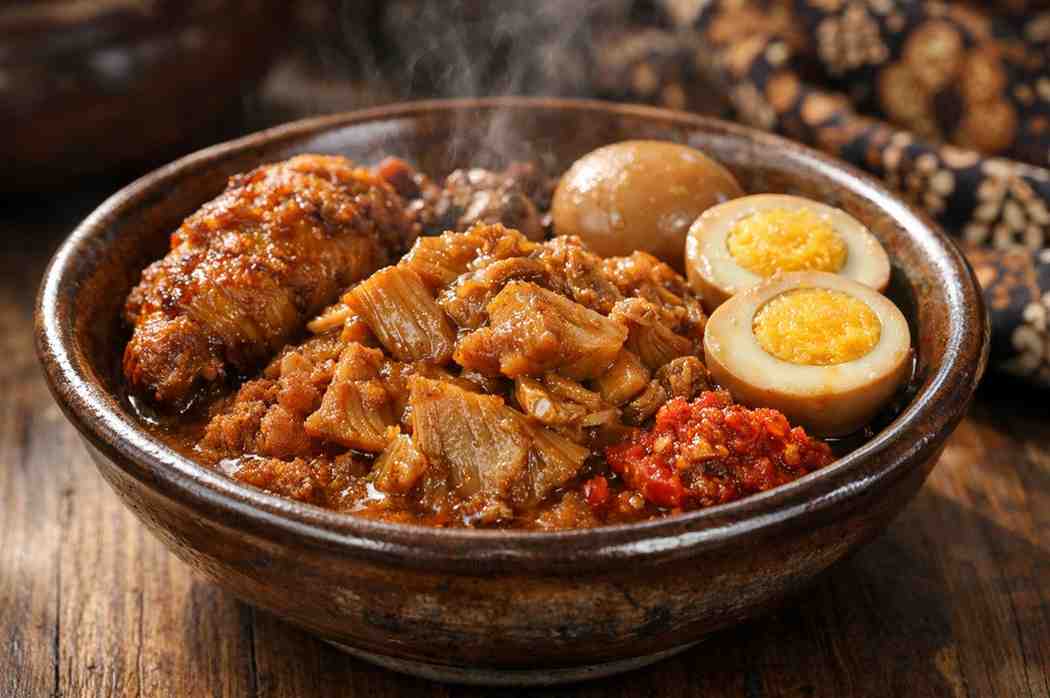
Indonesia is a land of culinary treasures, each region boasting dishes that reflect its unique history, culture, and ingredients. Among these, Gudeg stands out as a dish that’s not just food but a story on a plate—a culinary tradition that has delighted generations in Yogyakarta and beyond.
What is Gudeg?
Gudeg is a traditional Javanese dish made primarily from young unripe jackfruit, locally called “nangka muda”. The jackfruit is slow-cooked for several hours with a mixture of coconut milk, palm sugar, and a blend of spices including garlic, shallots, coriander, galangal, and candlenuts. The result is a dish that’s soft, sweet, and richly aromatic, with jackfruit absorbing all the flavors from the coconut and spices.
The long cooking process is what makes Gudeg truly special. Traditionally, it can be simmered for up to 10 hours, which allows the jackfruit to transform into a tender, melt-in-your-mouth delicacy with a naturally sweet and savory flavor profile. Depending on the style, Gudeg can be dry, semi-wet, or soup-like, each with its own character.
A Taste of Yogyakarta: The Gudeg Experience
Gudeg is more than its main ingredient. It is often served as a complete meal with rice, chicken (ayam), boiled eggs, tofu, tempeh, and sambal krecek—a spicy condiment made from crispy beef skin. The combination of sweet Gudeg and spicy sambal krecek creates a harmonious balance that epitomizes the Javanese taste: sweet tempered with a hint of heat.
- Dry Gudeg: Has less coconut milk, with a thicker, caramelized texture.
- Wet Gudeg: More liquid due to extra coconut milk, creating a stew-like consistency.
- Solo-style vs. Yogyakarta-style: Solo’s version tends to be sweeter, while Yogyakarta’s is slightly spicier and more robust in flavor.
Eating Gudeg is not just about taste; it’s about ritual and social culture. In Yogyakarta, locals often eat Gudeg for breakfast, lunch, or special occasions. It’s commonly sold in warungs (small eateries) or packaged in bungkusan (banana leaves) for takeaway, making it accessible to anyone craving this iconic dish.
The Cultural Significance of Gudeg
Gudeg isn’t just food—it’s a symbol of Javanese patience, hospitality, and craftsmanship. Its preparation, which takes hours, reflects the cultural value of taking time to nurture, create, and honor food. Families pass down recipes through generations, and each household may have its own twist, often closely guarded as a family secret.
In addition, Gudeg plays a role in ceremonial and festive events. It’s common to see Gudeg served during birthdays, weddings, and traditional Javanese ceremonies. Its rich, sweet taste is considered auspicious, symbolizing harmony and prosperity.
Health Benefits and Ingredients
- Jackfruit: High in fiber, vitamins (like vitamin C), and antioxidants.
- Coconut milk: Provides healthy fats, though calorie-dense, it gives Gudeg its signature richness.
- Spices: Ingredients like garlic, galangal, and coriander have anti-inflammatory and digestive benefits.
However, due to its high sugar content from palm sugar, Gudeg is best enjoyed in moderation, making it more of a special treat than an everyday dish.
How to Enjoy Gudeg
The best way to enjoy Gudeg is fresh from a local warung in Yogyakarta, served with steamed rice and all the accompaniments. For those outside Indonesia, Gudeg is sometimes available in canned form, which preserves its sweet, savory goodness for international distribution. Cooking it at home is possible but requires patience, as the slow-cooking process is essential for achieving the authentic texture and flavor.
- Jasmine rice or steamed white rice
- Fried chicken or egg
- Sambal krecek for spicy contrast
- Pickled vegetables (acar) to balance the sweetness
Gudeg in the Modern World
In recent years, Gudeg has gained attention beyond Yogyakarta, thanks to Indonesia’s growing culinary tourism. Food bloggers, travel enthusiasts, and chefs are introducing Gudeg to a global audience, sometimes reinventing it with fusion variations—jackfruit tacos, vegan Gudeg bowls, or Gudeg pizza. While innovative, purists argue that nothing beats the slow-cooked, banana-leaf-wrapped classic.
Conclusion
Gudeg is more than just a dish; it’s a journey into the heart of Javanese culture, a lesson in patience, and a celebration of natural flavors. Every bite tells a story—of centuries-old traditions, family recipes, and the gentle sweetness that defines Yogyakarta itself. Whether you taste it in a bustling street market or try your hand at cooking it at home, Gudeg offers a truly unforgettable culinary experience.
So the next time you find yourself in Indonesia—or at a Javanese restaurant abroad—let your senses guide you to Gudeg. Sweet, savory, and soulful, it’s a dish that leaves a lasting impression far beyond the last bite.