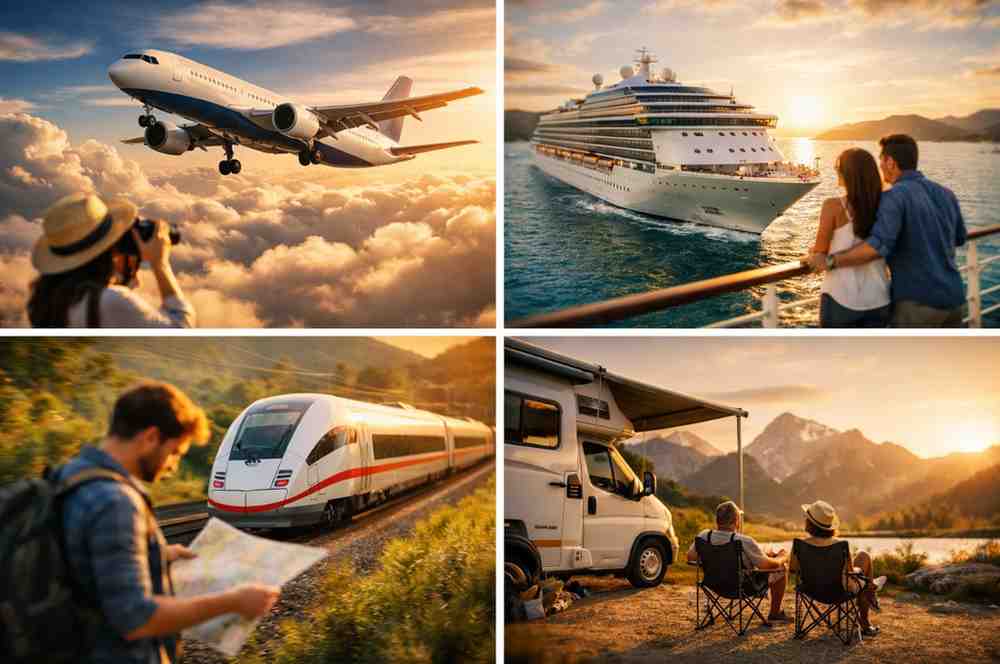
Travel is about movement, adventure, and discovery, but the way you travel can completely shape your experience. From luxurious flights across continents to scenic road trips or eco-friendly journeys, each mode of travel offers different advantages, challenges, and experiences. Choosing the right mode of travel is essential to match your destination, budget, preferences, and style of adventure.
In this blog, we’ll explore the main modes of travel, their benefits, and tips for making the most of each.
1. Air Travel
- Advantages: Fast and efficient, reducing travel time significantly; access to remote destinations or islands that are otherwise hard to reach; comfort and convenience, especially with long-haul flights.
- Tips: Book in advance for better prices; use loyalty programs and travel apps for rewards; pack smart and check luggage restrictions carefully.
- Experiential Insight: Air travel allows you to maximize your time at the destination, leaving less time wasted on long commutes.
2. Road Travel
- Advantages: Stop wherever you want, making detours to hidden gems or local attractions; ideal for short distances or regional trips; great for families or groups traveling together.
- Tips: Ensure vehicle maintenance and fuel availability; plan your route but leave room for spontaneous exploration; pack snacks, water, and emergency kits.
- Experiential Insight: A road trip often creates memorable adventures, from roadside diners to scenic photo stops, making the journey as important as the destination.
3. Rail Travel
- Advantages: Eco-friendly and energy-efficient compared to flying; allows passengers to enjoy landscapes during the journey; often more spacious and relaxing than buses or planes.
- Tips: Book tickets early for high-speed or long-distance trains; choose sleeper compartments for overnight journeys; check luggage limits and onboard amenities.
- Experiential Insight: Train journeys, such as Europe’s high-speed rail or India’s scenic routes, can become memorable travel experiences in themselves, not just transportation.
4. Sea Travel
- Advantages: Scenic and relaxing, ideal for leisure travel; can connect islands or cross oceans without flights; cruises often combine transportation with accommodation and entertainment.
- Tips: Check weather and seasonal conditions; pack for motion sickness if needed; take advantage of onboard excursions to explore ports.
- Experiential Insight: Sea travel allows you to slow down and enjoy the journey, creating a deeper connection with maritime culture and coastal landscapes.
5. Cycling and Walking
- Advantages: Environmentally friendly and healthy; offers close interaction with local neighborhoods and natural surroundings; flexible pace and full control of route and stops.
- Tips: Wear proper safety gear and plan routes carefully; carry water, snacks, and navigation tools; respect local traffic rules and pedestrian zones.
- Experiential Insight: Traveling by bike or on foot gives a deep sense of place, letting you notice details often missed by faster modes of transport.
6. Public Transport
- Advantages: Budget-friendly, especially in cities with integrated systems; provides insight into local life and culture; reduces environmental impact compared to private vehicles.
- Tips: Learn the routes and schedules in advance; carry small change or use digital fare cards; stay alert for pickpocketing or crowded situations.
- Experiential Insight: Using local transport is a window into the everyday life of residents, often creating authentic cultural encounters.
7. Emerging Travel Modes
- Hyperloop: Ultra-fast, tube-based travel connecting cities in minutes.
- Autonomous Vehicles: Self-driving cars and buses for seamless mobility.
- Electric and Eco-Friendly Vehicles: Reducing carbon footprint while traveling.
- Urban Air Mobility (Flying Taxis): Promises faster city commutes in the future.
- Experiential Insight: Emerging travel modes may redefine speed, comfort, and sustainability, making travel faster, safer, and greener.
Tips for Choosing the Right Mode of Travel
- Distance & Duration: Fly for long distances, road or rail for regional travel.
- Budget: Public transport and trains are cost-effective; flights are faster but pricier.
- Experience: For scenic journeys, choose trains, boats, or road trips.
- Convenience: Consider luggage, accessibility, and mobility needs.
- Sustainability: Walking, cycling, trains, and electric vehicles reduce environmental impact.
Conclusion
The mode of travel you choose shapes your journey, comfort, experience, and memories. From the speed of air travel to the scenic intimacy of trains, the adventure of road trips, or the immersive nature of walking and cycling, each option has its unique benefits.
By understanding your destination, budget, and travel goals, you can select the right travel mode that enhances both the journey and the destination experience. Ultimately, travel is about exploration and connection—and choosing the right mode ensures every journey is enjoyable, memorable, and enriching.