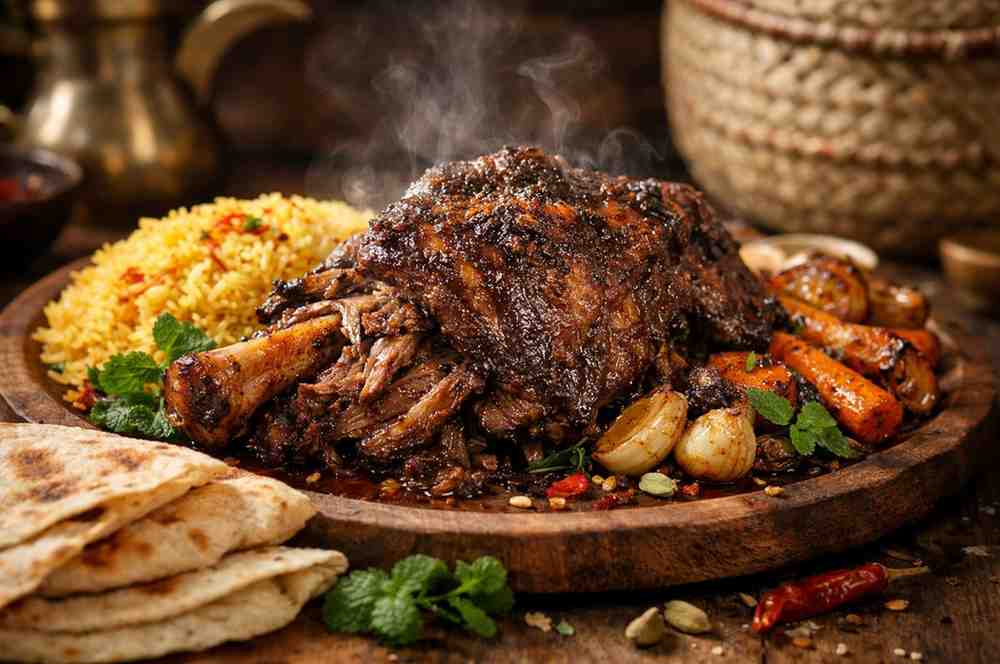
When it comes to culinary traditions that define a culture, few dishes can match the ritual, flavor, and celebration embodied in Shuwa, Oman’s iconic slow-cooked lamb. This dish is not just a meal; it’s a symbol of community, heritage, and festivity, a centerpiece for Omani celebrations that brings people together around the warmth of food and tradition.
What is Shuwa?
Shuwa is a slow-cooked, spiced lamb (sometimes goat or beef) traditionally prepared for Eid al-Adha, weddings, and other major celebrations in Oman. The meat is marinated in a rich mixture of Omani spices, including coriander, garlic, cumin, cinnamon, cardamom, cloves, chili, and sometimes saffron, blended into a paste with oil or vinegar. After marination, the meat is wrapped in banana leaves or palm fronds, placed in a special underground sand oven, and slow-cooked for 24–48 hours.
The result is nothing short of extraordinary: the meat becomes tender enough to fall off the bone, infused with deep, smoky flavors and aromatic spices. Each bite melts in your mouth while carrying the essence of Oman’s culinary heritage.
The Traditional Shuwa Cooking Process
What makes Shuwa truly unique is the preparation and cooking ritual, which is often a community affair:
- Marination: The meat is generously coated with the spice paste, sometimes days in advance, allowing the flavors to penetrate deeply.
- Wrapping: Large cuts of meat are wrapped tightly in banana leaves, then bound with ropes or palm fronds.
- Underground Cooking: Holes are dug into the sand, lined with stones or bricks, and a fire is lit to heat the pit. The wrapped meat is buried, covered with sand, and left to cook for a full day or more.
This method, sometimes called a "sand oven" or "earth oven", imparts a unique smokiness while retaining moisture, creating a taste and texture that’s impossible to replicate with conventional ovens.
A Taste of Omani Celebration
Shuwa is not an everyday meal—it is a dish of celebration. Traditionally prepared for Eid, Shuwa embodies the values of generosity and community. Families and neighbors often come together, helping with marination, preparation, and the labor-intensive burial process. When the Shuwa is finally unearthed, the aroma alone signals a feast worth waiting for.
It is typically served with rice, flatbreads (like khubz), or Omani halwa, and often accompanied by sides like salads or yogurt sauces to balance the richness of the meat. The combination of slow-cooked lamb, aromatic spices, and celebratory sides creates a meal that is both regal and deeply comforting.
Cultural Significance of Shuwa
Shuwa represents much more than flavor—it is Omani heritage on a plate. The process reflects patience, precision, and respect for tradition, mirroring the values embedded in Omani society. In many regions, Shuwa preparation is a multi-generational practice, with recipes passed down orally from parents to children, keeping the flavors—and the culture—alive.
Moreover, Shuwa is tied to communal identity. During Eid, neighbors often share portions, reinforcing social bonds and expressing hospitality. It is a culinary celebration of life, family, and community.
Health and Ingredients
- Lamb: High in protein and iron.
- Spices (cumin, coriander, cloves, cardamom): Aid digestion, have anti-inflammatory properties, and provide antioxidants.
- Garlic and onions: Contribute both flavor and health benefits.
The slow-cooked process ensures the meat retains nutrients while the spice paste enhances taste naturally, without needing artificial additives.
Enjoying Shuwa
To truly enjoy Shuwa, one must embrace the communal and ceremonial aspect of the dish. In Oman, digging into a freshly unearthed Shuwa with family and friends is a sensory experience, combining taste, aroma, and storytelling. For those outside Oman, Shuwa can be approximated using slow cookers or ovens, though traditional earth-cooked flavor is hard to replicate fully.
- Steamed or spiced rice
- Omani flatbreads (khubz)
- Fresh salads or pickled vegetables
- Omani halwa or dates for dessert
Shuwa in the Modern World
With the rise of Omani culinary tourism, Shuwa is increasingly celebrated in restaurants and food festivals, often showcased as the crown jewel of Omani cuisine. Chefs experiment with modern twists, like herb-infused slow-roasts or fusion presentations, but purists argue that nothing compares to the traditional banana leaf-wrapped, sand-cooked Shuwa.
Conclusion
Shuwa is more than a dish—it is a symbol of heritage, patience, and communal joy. Each bite connects you to centuries of Omani tradition, family rituals, and the spirit of celebration. For those lucky enough to experience it in its authentic form, Shuwa is an unforgettable feast: rich, aromatic, tender, and deeply soulful.
It is a reminder that some meals are not just about sustenance—they are a way to preserve culture, tell stories, and bring people together.